How to Trust God When Things Feel Uncertain

Standing in the middle of a major life transition is rarely just a matter of logistics. The deeper challenge is often the emotional weight of trying to plan for a future you cannot see. When career paths shift, family dynamics change, routines disappear, or the next step feels unclear, our natural instinct is to reach for control.
Uncertainty can feel threatening because our minds naturally want answers. We want to know what is coming, how it will unfold, and whether we will have what we need when we get there. When those answers are missing, worry can begin to fill the space.
But Scripture shows us that the remedy for uncertainty is not a perfect five-year plan. It is a secure place to stand. God does not ask us to know the whole road ahead. He invites us to trust the One who is already there.
Here are eight biblical ways to trust God when life feels uncertain.
Quick Guide
1. Seek God’s Kingdom First

Uncertainty often pulls our attention inward and downward. We begin to focus on our immediate circumstances, our unanswered questions, and every possible outcome we cannot control.
In Matthew 6:33, Jesus gives us a different starting point: “But seek first the kingdom of God and his righteousness, and all these things will be added to you.”
Seeking God’s kingdom first does not mean ignoring real needs or pretending uncertainty is easy. It means changing the question that leads your day. Instead of asking, “What is going to happen to me tomorrow?” we learn to ask, “How can I honor God with my obedience today?”
It moves our hearts from fear-driven control to faithful presence. We may not know everything about the future, but we can still take the next faithful step with God today.
> Practical Application
Every morning this week, before you check the news, your messages, or your schedule, write down one simple way you can reflect Christ to someone else today. Serve someone. Encourage someone. Pray for someone. Let your first focus be God’s kingdom, not your uncertainty.
2. Cast Your Worries on God

We often mistake worry for wisdom. We carry every possible outcome in our minds, assuming that if we think about the problem long enough, we can somehow protect ourselves from pain.
But 1 Peter 5:7 gives us a better way: “Cast all your anxiety on him because he cares for you.”
The word translated “cast” carries the idea of throwing or placing a burden onto another. In other words, God does not invite us to politely manage our anxiety while it slowly wears us down. He invites us to bring the full weight of it to Him.
Your future was never meant to rest on your shoulders alone. God cares for you, and because He cares for you, He invites you to place the weight in His hands.
> Practical Application
If you feel overwhelmed by a specific decision, transition, or unknown outcome, write down the “what-if” questions you are carrying. Then pray through them one by one. As a simple act of trust, place that paper inside your Bible as a reminder that you have brought those burdens before the Lord.
3. Turn Your Worry Into Prayer

Scripture does not tell us to stop feeling anxious without giving us somewhere to take that anxiety. Instead, God teaches us to let worry become a doorway into prayer.
Philippians 4:6 says, “Do not be anxious about anything, but in everything by prayer and supplication with thanksgiving let your requests be made known to God.”
Notice the phrase “in everything.” God is not asking us to bring Him only the polished parts of our faith. He invites us to bring the anxious thoughts, the unanswered questions, the decisions we do not know how to make, and the future we cannot yet see.
When worry rises, let it become a prompt to pray. Instead of letting the same fear circle endlessly in your mind, bring it honestly before the Lord.
💡 Practical Application
When an anxious thought comes up today, turn it into a prayer statement. For example: “Lord, I feel anxious about this decision. I do not know what will happen next, but I trust that You know what I need.”
4. Remember God in the Waiting (Joseph’s Story)

God’s commands give us direction, but biblical stories help us see what trust looks like in real life.
Consider Joseph. As a young man, God gave him dreams that pointed toward a future of purpose and influence. But immediately after those dreams, Joseph was betrayed by his brothers, thrown into a pit, sold into slavery, falsely accused, and imprisoned.
For years, his circumstances seemed to contradict the promise. Yet Joseph’s story reminds us that God’s presence is not limited to seasons that make sense. Genesis 39 repeats a phrase that becomes an anchor in Joseph’s story: “The LORD was with Joseph.”
Joseph did not know how all the pieces would come together. But God was with him in the pit, with him in the prison, and with him in the long years between the promise and the fulfillment.
> Practical Application
When you feel stuck in the middle of a transition, read Genesis 39. Notice how often Scripture reminds us that the Lord was with Joseph. Then remind yourself: God’s presence in your life is not dependent on your circumstances turning around immediately.
5. Bring Your Honest Fears to God (David’s Story)

David also knew what it meant to wait in uncertainty. He was anointed by the prophet Samuel to be the next king of Israel. But instead of moving directly to the throne, David spent years running for his life from Saul.
He lived in caves, hid in wilderness places, and waited for a promise he could not force into fulfillment. Yet David did not hide his fear from God. He brought it into prayer.
Many of the Psalms show us this pattern. David was honest about his distress, but he continued to return to God’s character. In Psalm 13:5, he writes, “But I trust in your unfailing love; my heart rejoices in your salvation.”
Trusting God does not mean pretending you are not afraid. It means bringing your fear into the presence of the One whose love does not fail.
> Practical Application
If you are waiting for a new season to begin, spend time reading the wilderness Psalms, such as Psalm 13, Psalm 23, or Psalm 57. Write your honest fears to God, then finish by writing down three specific ways He has been faithful to you in the past.
6. Hold Fast to God’s Promises

When the future feels blank, we often need to look backward at God’s faithfulness.
Abraham knew this well. God called him to leave his homeland and go to a place he did not yet know. God promised that Abraham’s descendants would become a great nation, but Abraham waited years without seeing the promise fulfilled in the way he expected.
That long waiting season did not make God less faithful. It revealed that trust is not built on having every detail in advance. Trust is built on the character of the One who makes the promise.
God’s promises are not fragile. They do not become weaker when our circumstances feel uncertain. The God who kept His word to Abraham is still faithful today.
💡 Practical Application
When your mind starts circling around a missing detail in your future, say this out loud: “God, I do not know the outcome, but I know who You are. You have been faithful before, and I trust You to be faithful again.”
7. Spend Intentional Time in God’s Word

A mind reacting to constant change needs to be grounded in something that does not change. That is why time in God’s Word is not merely a spiritual habit. It is a steadying practice for the heart.
When Joshua stood on the edge of the Promised Land with an enormous leadership burden before him, God gave him this instruction in Joshua 1:8: “Keep this Book of the Law always on your lips; meditate on it day and night, so that you may be careful to do everything written in it.”
Biblical meditation is not about emptying your mind. It is about filling your mind with God’s truth until His Word becomes louder than your fear.
Proverbs 3:5 also reminds us, “Trust in the LORD with all your heart and lean not on your own understanding.” That kind of trust grows as we spend intentional time listening to God through Scripture.
💡 Practical Application
Find a quiet place today, turn off your phone, and give God 10 uninterrupted minutes. Read one chapter of Scripture slowly. Sit in silence for a moment afterward. Let your heart settle in His presence before rushing to the next thing.
8. Keep Bible Verses Close in Uncertain Times
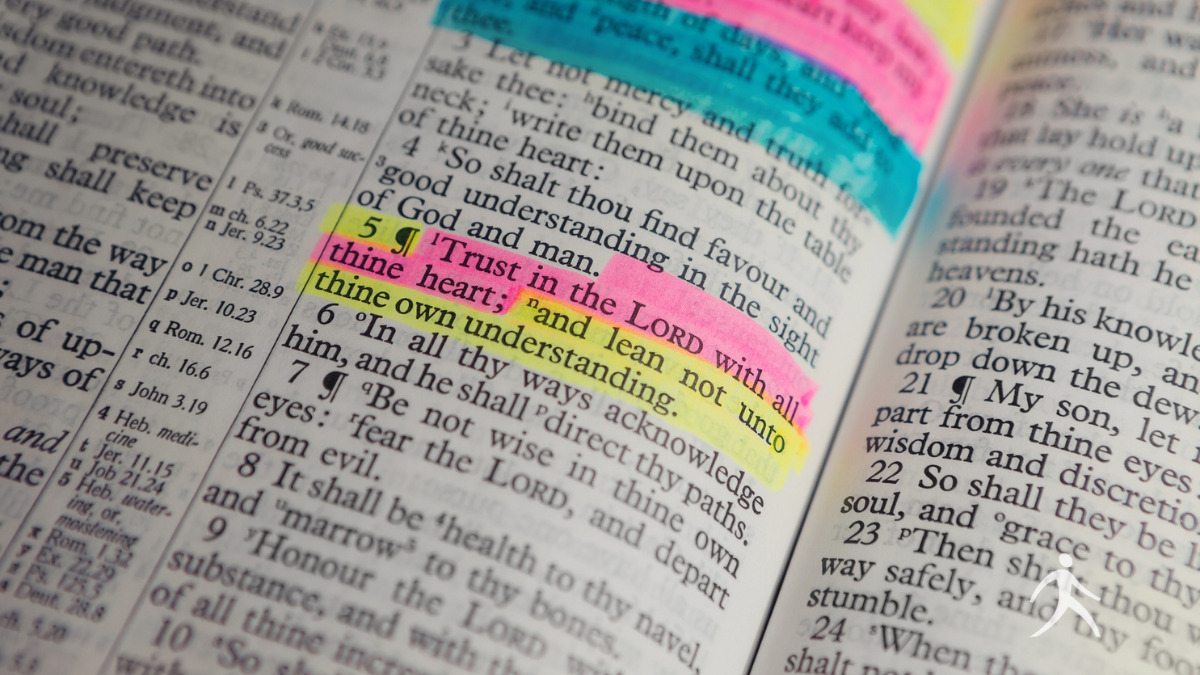
When anxiety rises, Scripture gives us words to hold onto. God’s Word reminds us of what is true when our feelings are loud, our circumstances are shifting, and our minds are tired from trying to figure everything out.
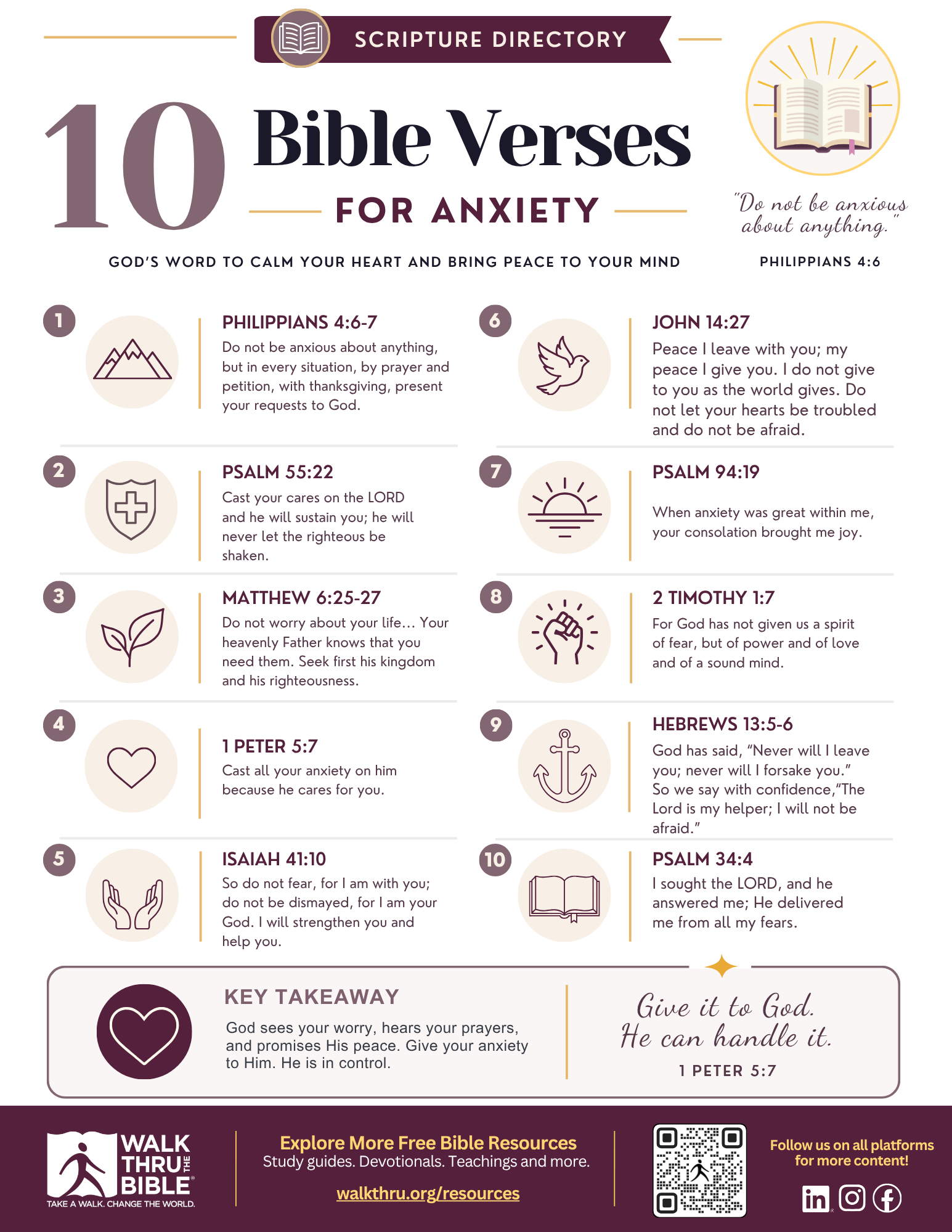
If you are looking for a simple, printable resource to keep close this week, explore our free companion guide: 10 Bible Verses for Anxiety.
Here are several passages to keep close to your heart:
- Philippians 4:6-7 — “Do not be anxious about anything…”
- Psalm 55:22 — “Cast your cares on the LORD…”
- Matthew 6:25-27 — “Do not worry about your life…”
- 1 Peter 5:7 — “Cast all your anxiety on him because he cares for you.”
- Isaiah 41:10 — “So do not fear, for I am with you…”
- John 14:27 — “Peace I leave with you; my peace I give you…”
- Psalm 94:19 — “When anxiety was great within me, your consolation brought me joy.”
- 2 Timothy 1:7 — “For God has not given us a spirit of fear…”
- Hebrews 13:5-6 — “Never will I leave you; never will I forsake you.”
- Psalm 34:4 — “I sought the LORD, and he answered me…”
💡 Practical Application
Choose one verse from the list above that speaks directly to what you are carrying today. Write it on a sticky note and place it somewhere visible—on your bathroom mirror, computer monitor, refrigerator, or car dashboard—as a steady reminder of God’s presence and care.
A Note for Navigating the Unknown
Consistent time in God’s Word can help steady us when life feels uncertain. Scripture does not always tell us every detail about what will happen next, but it continually reveals the character of the God who walks with us.
You do not need to know what the next year will look like in order to take the next faithful step. You can seek God’s kingdom today. You can cast your cares on Him today. You can turn worry into prayer today. You can remember His faithfulness today. And you can open His Word today.
The road ahead may still feel unclear, but you are not walking it alone.
Struggling with Worry?
Keep Scripture close when anxiety feels heavy. Download our free printable guide, 10 Bible Verses for Anxiety, and let God’s Word remind you of His peace, presence, and care.

Daily Walk Bible & Journal
When life feels completely out of your control, you need a daily map. The Daily Walk Bible and Journal give you a simple, structured 365-day reading plan with daily devotions designed to keep you steady when the world is shifting.