Have you ever noticed how two people can face the same circumstances but respond in completely different ways?
One sees an impossible obstacle. The other sees an opportunity to trust God. One becomes overwhelmed by uncertainty. The other finds courage to move forward.
What makes the difference?
Often, it begins with how we think.
Our thoughts shape our attitudes, influence our decisions and affect how we respond to life's challenges. But our perspectives are also shaped by our experiences, fears and the voices we listen to.
What if the way we think isn't always the way God wants us to think?
The Bible does more than teach us about God. Through His Word, God transforms how we understand ourselves, our circumstances and the world around us.
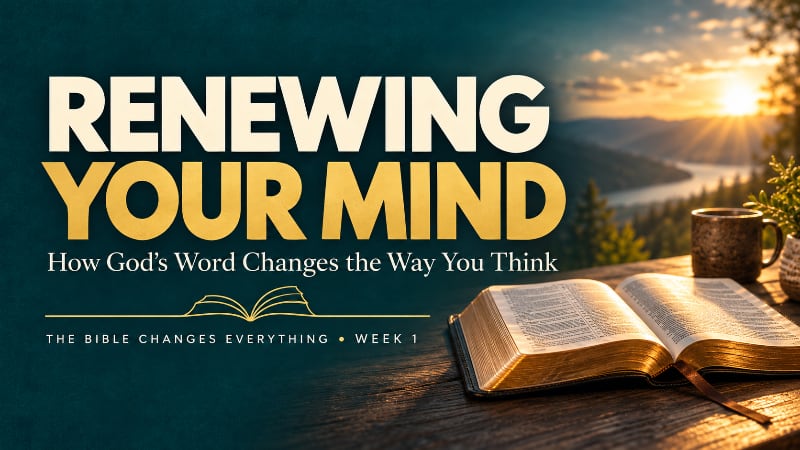
Real transformation begins in the mind
In Romans 12:2, the apostle Paul writes:
"Do not conform to the pattern of this world, but be transformed by the renewing of your mind." (NIV)
Paul's words follow 11 chapters explaining God's mercy, grace and salvation through Jesus Christ. Now, Paul challenges believers to respond to that grace by living differently.
Notice where that transformation begins: in the mind.
The world constantly tells us what matters, where to find happiness and how to measure success. Without realizing it, we can begin adopting perspectives that contradict God's truth.
But Scripture offers a different way of thinking.
As we read and reflect on God's Word, the Holy Spirit works within us, helping us recognize what is true and align our perspectives with God's character and purposes.
This isn't simply positive thinking. It's learning to see life through the lens of Scripture.
Same circumstances, different perspectives
One of the clearest examples of this principle appears in Numbers 13-14.
God had delivered the Israelites from Egypt and led them toward the land He promised them. Moses sent 12 spies to explore the land and report what they discovered.
All 12 witnessed the same things: fertile land, fortified cities and powerful inhabitants.
But their conclusions were dramatically different.
Ten spies focused on the obstacles. They believed Israel couldn't overcome the people living there.
Joshua and Caleb saw those same challenges but remembered something the others had forgotten: God's promise.
They urged the Israelites to trust the Lord rather than surrender to fear.
The difference wasn't what they saw. It was how they interpreted what they saw.
Joshua and Caleb didn't ignore reality. They viewed their circumstances through the truth of what God had promised Israel.
We shouldn't assume God has promised us victory over every personal obstacle. But their example reminds us that God's truth should shape how we understand life's challenges.
Three ways God's Word changes our thinking
When we consistently engage with Scripture, it begins reshaping how we see everyday life.
1. It changes how we see ourselves
The world often measures our worth through accomplishments, appearances or other people's approval.
But Ephesians 2:8-10 reminds believers that salvation is a gift of God's grace, not something we earn. We are God's workmanship, created in Christ Jesus for good works.
Our identity in Christ isn't determined by our achievements. It's grounded in God's grace.
2. It changes how we see our circumstances
Life brings uncertainty, disappointment and hardship. Sometimes fear becomes the loudest voice in our minds.
In Philippians 4:6-9, Paul encourages believers to bring their concerns to God through prayer and focus their thoughts on what is true, honorable and worthy of praise.
Renewing our minds doesn't mean ignoring our struggles or pretending everything is fine.
It means remembering God's faithfulness, even when our circumstances are difficult.
3. It changes how we see others
It's easy to judge people, become impatient or focus primarily on our own needs.
But Philippians 2:3-5 calls believers to humility and points to Jesus as our example.
When God's Word shapes our thinking, we begin seeing others through a different lens — one marked by compassion, humility and love.
How can you begin renewing your mind?
Spiritual transformation doesn't happen simply because we know what the Bible says. God's truth must become part of how we think and live.
Here are three ways to begin:
1. Spend time in God's Word. Make Scripture a consistent part of your life. Even a few thoughtfully read verses can help you better understand God's character and truth.
2. Examine your thoughts. When fear, pride or insecurity influences your perspective, ask whether your thinking aligns with what Scripture teaches.
3. Put God's Word into practice. James 1:22 reminds us to be doers of the Word, not merely hearers. Allow what you learn to influence your decisions, relationships and actions.
Remember, renewing your mind is an ongoing process. God continues his transforming work as we walk with him and respond to his Word.
What needs to change in your thinking?
Consider this question:
What is one area of your thinking that needs to align more closely with God's Word?
Perhaps it's how you see yourself, how you respond to uncertainty or how you treat someone who has hurt you.
Whatever it may be, remember that God doesn't simply call us to change our behavior. Through His Word and the work of the Holy Spirit, He transforms us from the inside out.
The Bible doesn't just change what we know.
It changes how we think. And that can change everything.
Go deeper in God's Word
This week, spend time reflecting on these passages:
Romans 12:1-2: What does it mean to have your mind renewed?
Psalm 119:9-16: How can God's Word become a greater influence in your daily life?
Philippians 4:4-9: What thoughts do you need to bring before God today?
The goal isn't simply to read more of the Bible. It's to know God more deeply and allow his Word to shape the way you live.