Put God’s Word Into Practice
The Bible Changes What We Do
Learning to Follow God’s Word in Everyday Life
The Bible Changes Everything | Week 3
You read a passage about being slow to anger in the morning. By lunchtime, a frustrating message has you typing a reply you know you’ll regret. You remember what you read. Now comes the harder question. Will it change what you do next?
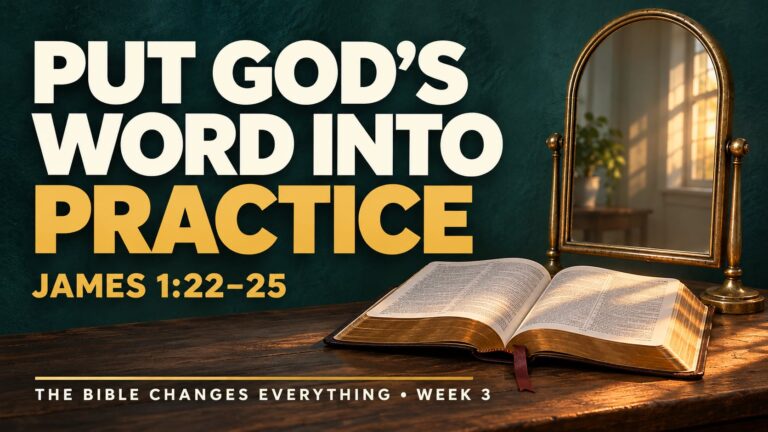
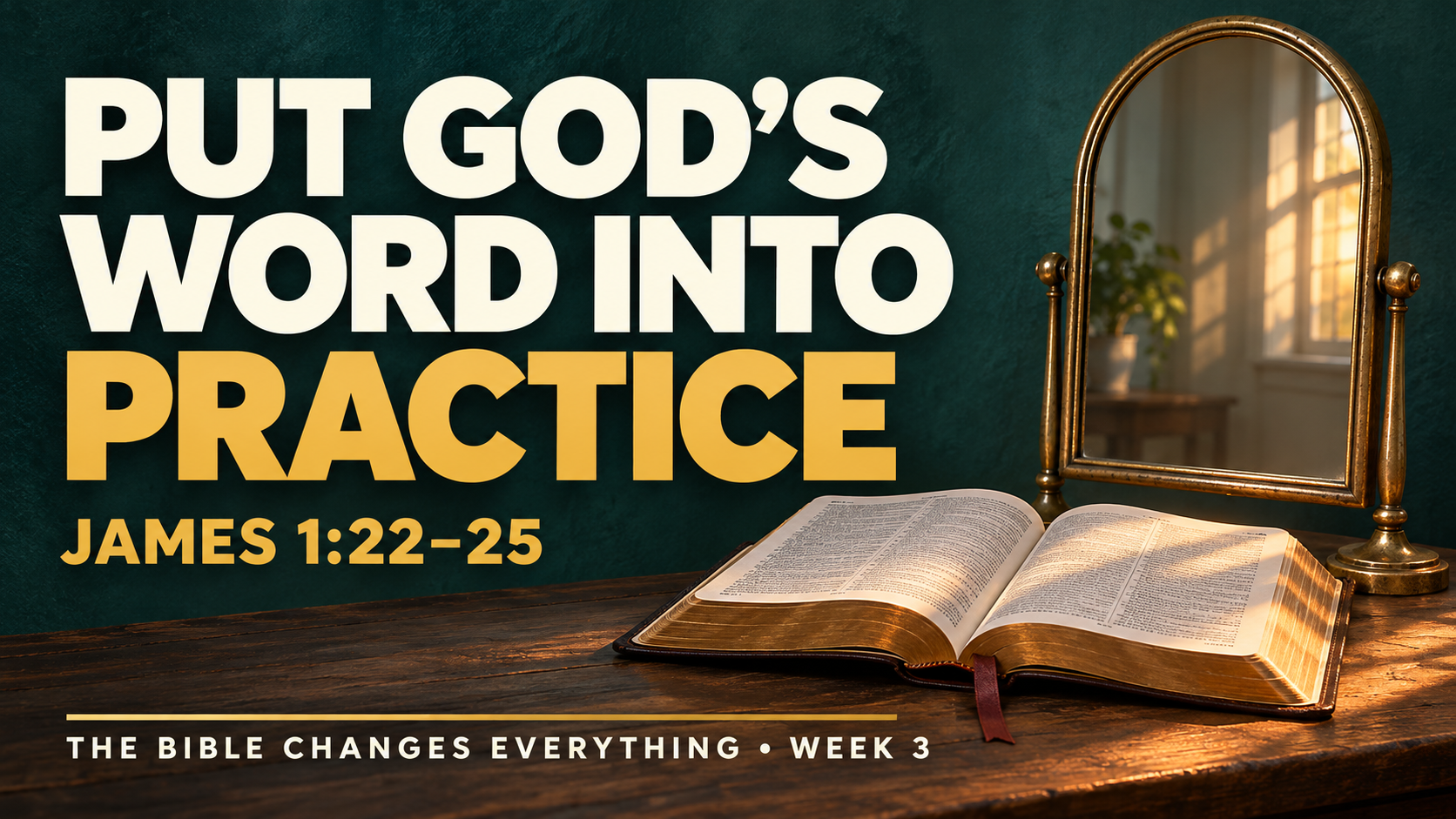
James invites us to take that question seriously. In James 1:22–25, he compares hearing God’s Word without acting on it to looking in a mirror, walking away and immediately forgetting what you saw. God’s Word shows us what’s going on in our hearts and how He calls us to live. What we do after we walk away from the mirror matters.
Following through can be difficult. We may understand what God asks while feeling a strong pull toward something else. Learning to obey involves bringing those moments before Him and allowing His Word to shape our response.
Why obedience to God’s Word matters
When we love someone, we care about how our actions affect them. We want to bring them joy. Their desires begin to matter in the decisions we make.
Our love for God shapes us in a similar way. As we grow closer to Him, we increasingly want Him to be pleased with how we live. His love, wisdom and faithfulness give us reasons to trust His instructions, even when following them is difficult.
In John 14:15, Jesus connects loving Him with keeping His commands. Obedience becomes an expression of our relationship with Him. It takes shape in the way we speak to our spouse, handle a disagreement, conduct our work and respond to someone in need.
That relationship begins with grace. Ephesians 2:8–10 explains that we are saved by grace through faith, apart from works, and created in Christ to do good works. Our obedience cannot earn salvation. Jesus Christ saves us through His death and resurrection, and we receive that gift through faith in Him. The good works that follow are the fruit of His work in our lives.
As our love for Him deepens, our desires begin to change. Having the last word may become less important than speaking with kindness. Protecting our comfort may give way to serving someone else. We learn to ask how our choices can honor the God who loves us.
When our desires pull us toward sin
Even as those desires change, the struggle with sin remains. We may want to honor God and still feel an urge to retaliate, hide the truth or put ourselves first.
Romans 7:15–20 gives language to the painful conflict between wanting to do what is right and doing what is wrong. Galatians 5:16–17 also describes the opposition between the flesh and the Spirit and calls believers to walk by the Spirit. We need God’s help in the very moments when our desires push against His instructions.
Consider that angry reply. Beneath the words you’re typing may be a desire to embarrass the other person or prove that you’re right. Recognizing that desire helps you see what needs to change. Ask God to help you face it honestly.
Then bring Scripture into the decision. James 1:19–20 calls us to listen readily and be slow to speak and slow to anger. Remembering that instruction gives you something concrete to act on. Put down the phone. Pray for help. Reread the message and consider what you may have misunderstood. Choose words that address the issue with patience.
It also helps to prepare before temptation arrives. Keep a relevant passage where you’ll see it. Notice the situations in which you repeatedly struggle. If a particular habit keeps drawing you into sin, speak with a trusted Christian who can pray with you and help you take practical steps toward obedience.
Sometimes you will still feel angry or reluctant as you take the right step. You can act on God’s Word while asking Him to keep changing your heart.
When we give in to the struggle
There will be times when we choose wrongly. We send the message, speak the cruel words or make the selfish decision. Our response afterward matters.
For some, sinful choice leads to another, and shame makes them withdraw from prayer, Scripture and Christian community. They begin to live with a deepening sense of distance from Christ.
Others become accustomed to the behavior. They excuse it as part of their personality or tell themselves it’s simply how life works. Over time, accepting that pattern hinders growth. They become less responsive to what God is showing them.
Believers can face failure honestly because their security rests in Christ. In John 10:27–29, Jesus promises His sheep eternal life and describes their safety in His and the Father’s care. Those who belong to Him cannot lose their salvation. His faithfulness gives us confidence to return to Him when we sin.
The response Scripture calls us toward is repentance. When we recognize sin, we acknowledge it, confess it to God and turn toward obedience. 1 John 1:9 assures us that God is faithful to forgive and cleanse those who confess their sins.
For the person who sent the angry reply, repentance may include an apology that takes responsibility without excuses. It may also mean changing how they handle the next difficult conversation. Where harm has been done, we seek to make it right as far as we are able.
That turning can happen today. We can bring our failure to God, receive His forgiveness and take the next faithful step.
What will you do with what God has shown you?
Return to the mirror in James 1. God’s Word has shown you something about your heart, your habits or your treatment of another person. Carry that truth with you as you move into the day.
Consider these questions as you read James 1:22–25:
- Where do I understand God’s instructions but regularly choose my own way?
- When I sin, do I hide, excuse it or bring it to God in repentance?
- What specific step of obedience can I take today?
Perhaps you need to make an apology, tell the truth or respond with patience. Ask God for help and act on what He has shown you. When the next frustrating message arrives, let what you read shape what you do.
Free printable
Scripture Bookmark
Keep seven Scripture passages and quick thoughts on putting God’s Word into practice close at hand.
Memory verse
Ephesians 2:10
For we are his workmanship, created in Christ Jesus unto good works, which God hath before ordained that we should walk in them.
King James Version (KJV)
Read the verse aloud. What good work could you put into practice today?