
How to Address Loneliness According to the Bible
What Does the Bible Say About Loneliness?
Loneliness does not always look like being physically alone. You can feel lonely in a crowded room, around family, at work, in leadership, at church, or even while surrounded by people who care about you. Sometimes loneliness comes from physical separation. Other times, it comes from feeling unseen, misunderstood, forgotten, or as though you are carrying more than anyone realizes.
The Bible treats loneliness as a real human experience. Scripture does not shame people for feeling alone. Instead, it shows that we were created for relationship, gives us language to bring loneliness honestly before God, assures us of His presence, and calls His people to carry one another’s burdens.
The Bible does not promise that faithful people will never feel lonely. But it repeatedly reminds us that feeling alone does not mean God has abandoned us.
Quick Guide
- We Were Created for Relationship
- The Bible Gives Us Permission to Name Loneliness
- Hagar: When You Feel Unseen
- Joseph: When People Abandon You
- Moses: When Everyone Depends on You
- Elijah: When You Feel Like the Only One
- Jesus Entered Human Sorrow
- Does Feeling Lonely Mean God Has Abandoned You?
- What Should Christians Do When They Feel Lonely?
- Bible Verses for Loneliness
- How Can Christians Help Someone Who Feels Alone?
1. We Were Created for Relationship

One of the Bible’s most important statements about human relationship appears before sin ever enters the story. In Genesis 2:18, God looks at Adam and says, “It is not good for the man to be alone.”
Scripture does not explicitly tell us that Adam felt lonely. But it does tell us something even more foundational: human aloneness was not God’s completed design. Adam lived in a perfect environment. He had meaningful work. Most importantly, he lived in fellowship with God. And yet God still created human companionship.
That means our desire for meaningful relationships is not automatically a sign of spiritual weakness. Human beings were created for communion with God and relationship with one another.
God’s presence was never meant to make human relationships unnecessary.
This is an important truth for anyone who has ever wondered, “If I really trusted God, shouldn’t He be enough to keep me from feeling lonely?” Scripture gives us a more complete picture. We need God, and God has also designed us to live in meaningful relationship with other people.
> Practical Application
Think about one relationship you would like to strengthen this week. Instead of waiting for connection to happen automatically, take one intentional step. Send the text. Make the call. Accept the invitation. Invite someone for coffee. Small acts of connection can become meaningful beginnings.
2. The Bible Gives Us Permission to Say, “I’m Lonely”

The Bible does not ask us to pretend loneliness does not hurt. David says it plainly in Psalm 25:16: “Turn to me and be gracious to me, for I am lonely and afflicted.” There is no attempt to clean up the emotion before bringing it to God. David does not say, “I should not feel this way.” He simply tells God the truth.
Psalm 142 gives us another striking example. David describes looking around and feeling as though no one is concerned for him and no one cares what happens to him. The Psalms are filled with prayers like this: fear, grief, longing, waiting, confusion, worship, anger, trust, and hope all brought honestly before God.
This kind of prayer is often called lament. Lament is not faithlessness. It is pain brought into relationship with God.
Biblical faith allows us to say both:
“I feel alone.”
and
“God, I am still bringing this to You.”
> Practical Application
Finish this sentence honestly: “God, today I feel…” Do not edit the answer into something more spiritual. Let your prayer begin where you actually are.
3. Hagar: When You Feel Unseen

Hagar’s story in Genesis 16 is one of Scripture’s most powerful pictures of what it means to feel unseen. She is vulnerable, mistreated, pregnant, displaced, and eventually finds herself in the wilderness. Yet it is there that God meets her. Hagar responds by calling Him “the God who sees me.”
That statement is powerful because God’s response begins with recognition. Hagar may feel overlooked by the people around her, but she is not invisible to God.
Feeling unseen does not mean you are unseen.
Loneliness often whispers that nobody notices what we are carrying. Hagar’s story reminds us that God’s attention reaches people others may overlook.
> Practical Application
When you feel overlooked, spend a few minutes with Genesis 16:7-13. Ask God to help you remember that His awareness of you is not dependent upon how much attention you receive from other people.
4. Joseph: When People Abandon You

Joseph’s story repeatedly places him in circumstances that look like abandonment. His brothers betray him. He is taken away from his home. He becomes a servant in a foreign country. He is falsely accused and eventually imprisoned.
But Genesis 39 keeps returning to one sentence: “The LORD was with Joseph.”
The circumstances do not suddenly become easy. Joseph is still far from home. He is still dealing with injustice. He is still living through a future he could not have chosen for himself. Yet Scripture refuses to interpret Joseph’s isolation as God’s absence.
Human abandonment does not equal divine abandonment.
Sometimes the evidence of God’s presence is not that our circumstances change immediately. Sometimes His presence is what sustains us while the circumstances remain unresolved.
> Practical Application
Read Genesis 39 and notice how often Scripture reminds us that the Lord was with Joseph. If you are walking through a season of rejection, transition, or separation, write down this reminder: “My circumstances do not determine whether God is present.”
5. Moses: When Everyone Depends on You

Loneliness is not always caused by having nobody around you. Moses was surrounded by an entire nation, yet Numbers 11 records him telling God, “I cannot carry all these people by myself; the burden is too heavy for me.” This is a different kind of loneliness. It is the loneliness of responsibility.
Parents know it. Caregivers know it. Pastors, ministry leaders, teachers, managers, and anyone who is accustomed to being the strong person for everyone else may recognize it too. Everyone comes to you. Everyone needs something from you. But eventually you begin to wonder: Who helps carry me?
God’s response to Moses is significant. He does not simply tell Moses to endure more faithfully. He appoints seventy elders who will help share the burden. Sometimes God’s answer to “I cannot carry this alone” is other people helping us carry it. Needing support is not failure. Sometimes accepting help is itself an act of wisdom and faith.
> Practical Application
Ask yourself: “What am I carrying right now that someone else could help me carry?” Consider one responsibility, concern, or burden you can share with a trusted person this week.
6. Elijah: When You Feel Like You’re the Only One

Elijah reaches one of the lowest moments of his story in 1 Kings 19. After an extraordinary victory on Mount Carmel, he runs for his life from Jezebel. Exhausted, discouraged, and afraid, Elijah tells God that he believes he is the only faithful person left. His feeling of isolation is real. But his understanding of the situation is incomplete.
God eventually reminds Elijah that there are still thousands in Israel who have not bowed to Baal. Elijah is not as alone as he believes. What is equally striking is the way God responds before correcting him. Elijah receives rest, food, time, God’s presence, renewed perspective, purpose, and eventually companionship. God does not mock his exhaustion.
We can honor the reality of loneliness without assuming every conclusion loneliness whispers to us is true.
Sometimes loneliness says, “Nobody understands.” Or, “I’m the only one.” Or, “Nothing will ever change.” Elijah’s story reminds us that our feelings deserve compassion, but they do not always give us the complete picture.
> Practical Application
If you are exhausted, do not assume every discouraging thought requires an immediate spiritual solution. Ask whether you also need rest, nourishment, conversation, perspective, or support. Elijah’s story reminds us that God cares about the whole person.
7. Jesus Entered Human Sorrow

Jesus should not be reduced to simply another example of someone who “felt lonely.” But the Gospels do show us that He willingly entered profound human sorrow. In Gethsemane, Jesus tells Peter, James, and John, “My soul is overwhelmed with sorrow to the point of death.” He asks them to stay near Him and keep watch. They fall asleep.
The events surrounding the cross include betrayal, desertion, denial, rejection, suffering, and ultimately Jesus’ cry from Psalm 22: “My God, my God, why have you forsaken me?”
The Christian story does not give us a God who observes human suffering from a safe distance. In Jesus Christ, God entered suffering Himself. That means God’s compassion for people in sorrow is not theoretical. When we ask whether God understands pain, betrayal, rejection, grief, or the ache of feeling alone, the life of Jesus gives Christianity a profoundly personal answer.
Does Feeling Lonely Mean God Has Abandoned You?
No. That does not mean loneliness is imaginary. It means our feelings do not have the final word about God’s presence.
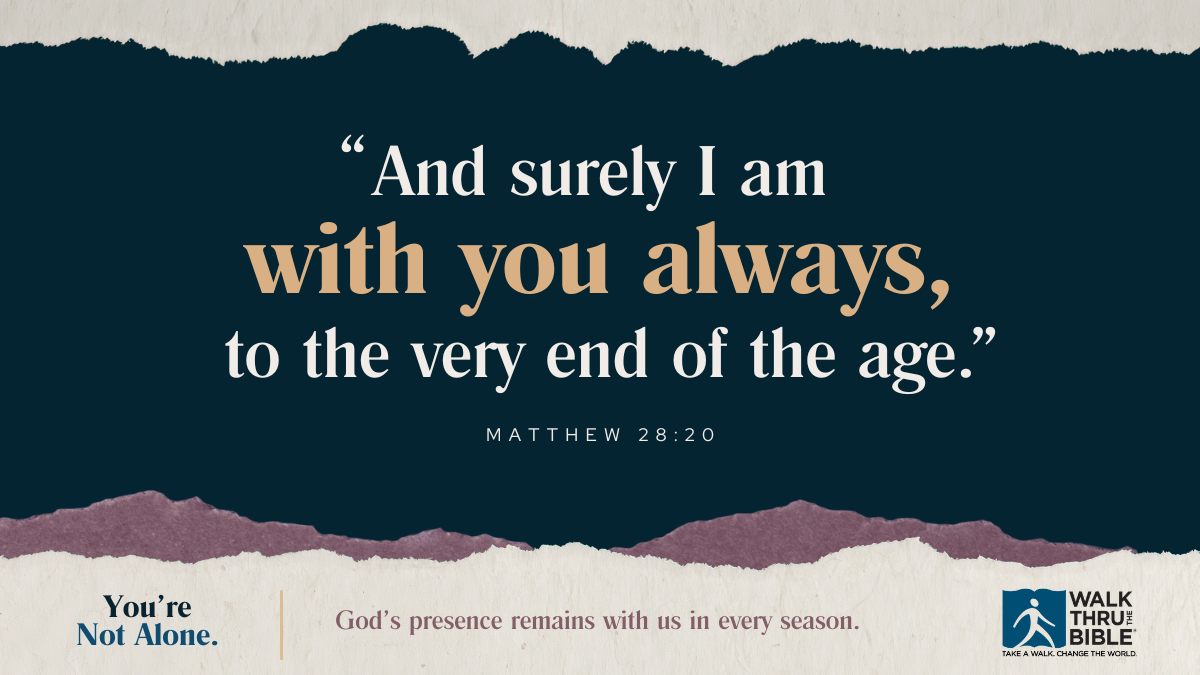
Jesus tells His disciples in Matthew 28:20, “I am with you always, to the very end of the age.” Hebrews 13:5 reminds believers that God will never leave or forsake them. Isaiah 41:10 repeatedly connects courage with God’s presence: “Do not fear, for I am with you.” Psalm 139 asks where we could possibly go beyond God’s presence—and concludes that there is nowhere.
Joseph’s story says the same thing narratively. Even in slavery and prison, the Lord was with Joseph. The Bible does not promise that God’s people will never feel alone. It promises that feeling alone does not mean God has abandoned them.
Why Can Christians Still Feel Lonely If God Is With Them?
Because God’s presence and human community are not competitors.
Genesis 2:18 tells us that human beings were created for relationship. Ecclesiastes 4 says two are better than one. Galatians 6 tells believers to carry one another’s burdens. Romans 12 tells us to rejoice with those who rejoice and mourn with those who mourn. Hebrews 10 encourages Christians not to give up gathering together.
The New Testament repeatedly describes the church as a body whose members belong to one another. Sometimes God’s care reaches us through another person. Moses needed elders. Elijah needed renewed perspective and eventually Elisha. The early church needed shared meals, prayer, generosity, teaching, and community.
So the Christian response to loneliness is not simply, “Pray harder.” Prayer matters deeply. And so do people.
What Should Christians Do When They Feel Lonely?
There is no single formula that instantly removes loneliness. But Scripture gives us several faithful next steps.
- Tell God the truth. Follow David’s example. Bring the real emotion to God instead of trying to make it sound more spiritual.
- Remember what remains true. Your feelings may accurately describe your current experience, but they do not determine whether God is present. Return to passages such as Matthew 28:20, Hebrews 13:5, Isaiah 41:10, and Psalm 139.
- Spend intentional time in Scripture. The Psalms are especially helpful because they give us language for grief, fear, waiting, worship, loneliness, gratitude, anger, hope, and trust.
- Tell someone. Loneliness often grows in silence. Consider telling a trusted friend, family member, pastor, small-group leader, or mentor what you are experiencing.
- Move toward meaningful community. Being around people and being known by people are not always the same thing. Look for opportunities to participate, serve, share meals, join a group, or build relationships where honesty can grow.
- Accept help. Moses’ story reminds us that there are burdens we were never meant to carry by ourselves.
- Seek additional support when needed. Persistent loneliness can sometimes exist alongside grief, depression, anxiety, trauma, major life transitions, or other significant challenges. Reaching out to a trusted pastor, counselor, physician, or qualified mental-health professional can be an important and wise step.
> Take One Step Today
Text one person. Pray one honest prayer. Read one Psalm. Accept one invitation. Ask for one conversation. You do not have to solve everything today. Take one faithful step toward God and meaningful connection.
Bible Verses for Loneliness and Feeling Alone
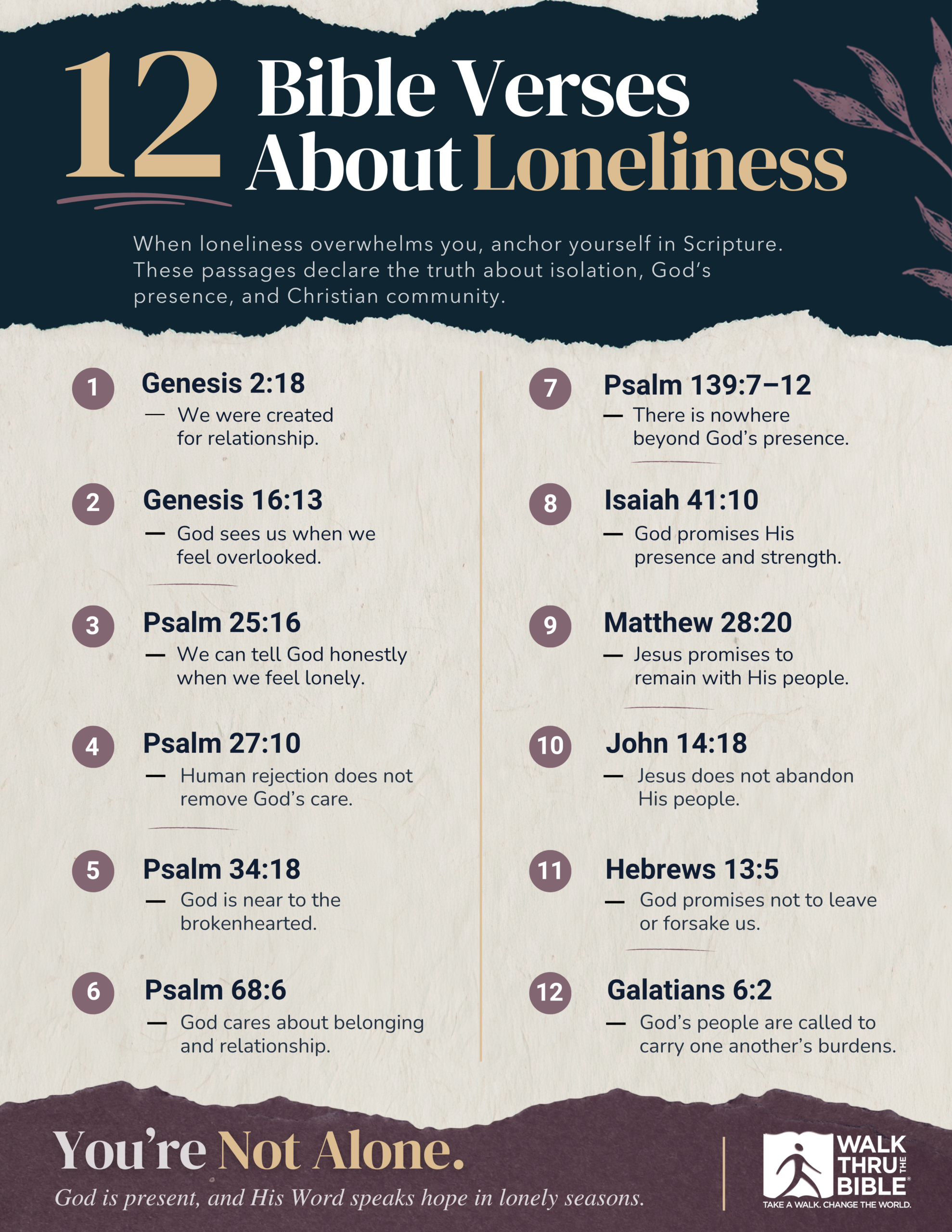
> Click here to get the free, high-quality printable PDF and mobile version
When loneliness strikes, stand firm in Scripture. These passages declare the truth about isolation, God’s presence, and Christian community:
- Genesis 2:18 — We were created for relationship.
- Genesis 16:13 — God sees people who feel overlooked.
- Psalm 25:16 — We can tell God honestly when we feel lonely.
- Psalm 27:10 — Human rejection does not remove God’s care.
- Psalm 34:18 — God is near to the brokenhearted.
- Psalm 68:6 — God cares about belonging and relationship.
- Psalm 139:7-12 — There is nowhere beyond God’s presence.
- Isaiah 41:10 — God promises His presence and strength.
- Matthew 28:20 — Jesus promises to remain with His people.
- John 14:18 — Jesus does not abandon His people.
- Hebrews 13:5 — God promises not to leave or forsake us.
- Galatians 6:2 — God’s people are called to carry one another’s burdens.
> Practical Application
Choose one passage from the list above and keep it somewhere visible this week. Put it on your phone lock screen, bathroom mirror, desk, refrigerator, or inside your Bible. Return to it when loneliness begins shaping the story you are telling yourself.
How Can Christians Help Someone Who Feels Alone?
Scripture does not only teach us what to do when we feel lonely. It also calls us to become people who notice those who may feel unseen.
- Notice. Pay attention to the person who has become quieter, the person sitting alone, the caregiver who is always helping everyone else, or the person entering a new season without familiar community.
- Listen. You do not need the perfect answer. Sometimes one of the most meaningful gifts we can offer is our full attention.
- Stay. Loneliness is rarely solved by one encouraging message. Consistent presence communicates something powerful: You matter enough for me to keep showing up.
- Invite. Instead of saying, “Let me know if you need anything,” consider making a specific invitation. Ask someone to coffee. Invite them to dinner. Sit beside them at church. Include them in something ordinary.
- Carry. Galatians 6:2 says, “Carry each other’s burdens.” Christian community is not simply about being near one another. It is about helping one another carry what is heavy.
So perhaps the question is not only:
“What should I do when I feel alone?”
It may also be:
“Who around me might feel unseen?”
Frequently Asked Questions About Loneliness in the Bible
Is loneliness a sin?
No. Scripture does not describe loneliness itself as a sin. Genesis 2:18 shows that human aloneness was identified as “not good” before sin entered the biblical story. The desire for meaningful relationship is part of God’s design for human beings.
What does God say about feeling alone?
The Bible repeatedly reminds God’s people that He remains present with them. Passages such as Isaiah 41:10, Matthew 28:20, Psalm 139:7-12, and Hebrews 13:5 emphasize God’s continuing presence and care.
Who in the Bible experienced loneliness or isolation?
Hagar, Joseph, Moses, Elijah, David, and Jesus all experienced different forms of isolation, rejection, displacement, heavy responsibility, sorrow, or abandonment. Their stories show that Scripture understands many different forms of human loneliness.
Why do I feel lonely even though I believe in God?
Because human beings were created both for fellowship with God and meaningful relationship with other people. God’s presence does not make human companionship unnecessary. Scripture repeatedly encourages believers to live, worship, serve, pray, and carry burdens together.
What Psalm should I read when I feel lonely?
Psalm 25, Psalm 27, Psalm 34, Psalm 68, Psalm 139, and Psalm 142 are especially helpful passages for seasons of loneliness, distress, fear, longing, and the need to remember God’s presence.
What Bible verse says I am not alone?
Matthew 28:20 contains one of Jesus’ clearest promises: “I am with you always, to the very end of the age.” Hebrews 13:5 also reminds believers that God will never leave or forsake them.
You’re Not Alone
Loneliness is real. David named it. Hagar knew what it was like to feel unseen. Joseph experienced betrayal and displacement. Moses discovered the loneliness of carrying too much. Elijah believed he was the only one left. Jesus entered profound human sorrow.
But throughout these stories, Scripture keeps revealing the same truths. God sees. God is present. And God created us for community.
You may feel alone today. Scripture gives you permission to tell God the truth, reminds you that His presence has not disappeared, and invites you toward the relationships we were created to share. You’re not alone.
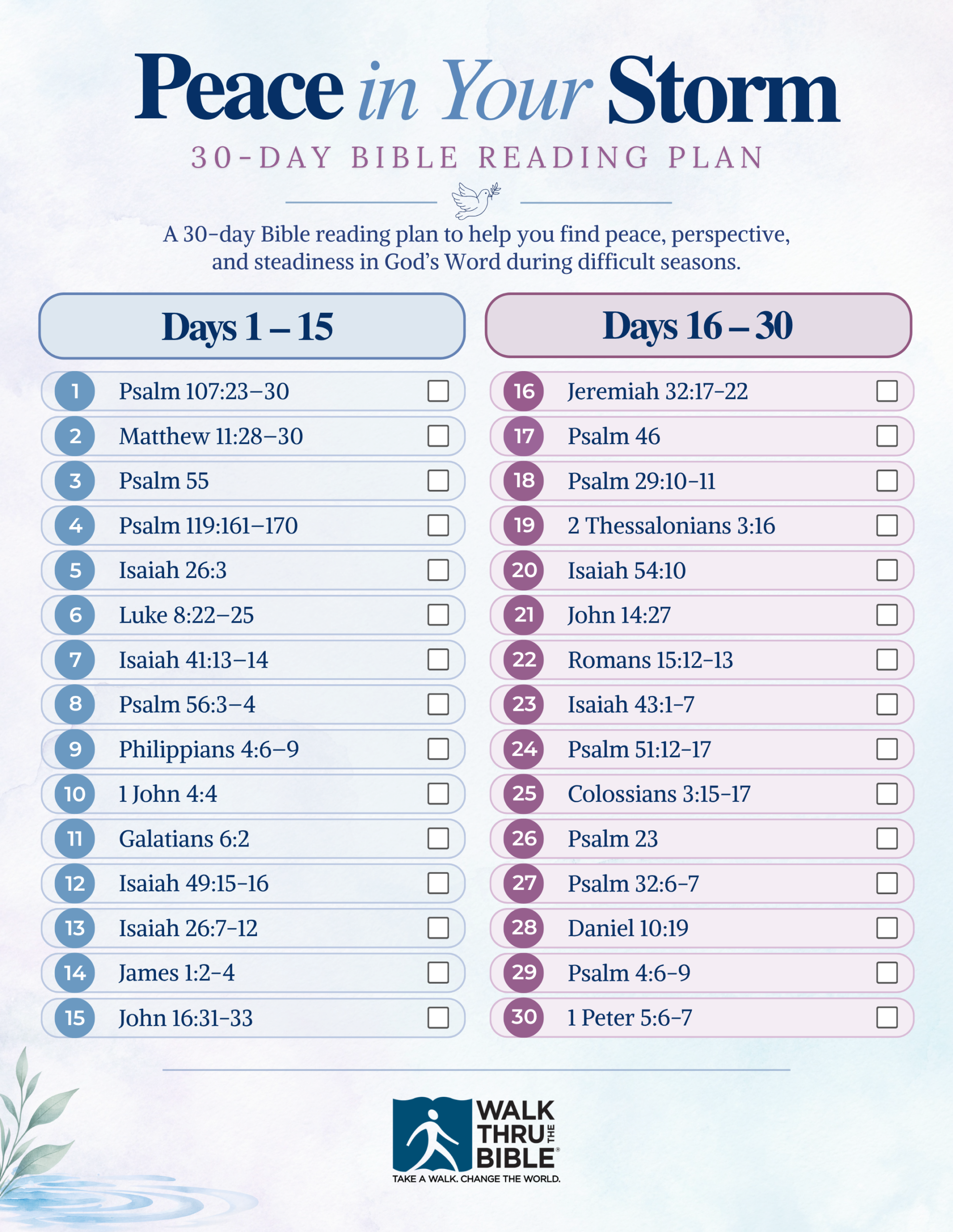
Peace in Your Storm
When loneliness is accompanied by fear, anxiety, uncertainty, or distress, spend time with Scripture that points you toward God’s peace, presence, and care.