Reading the Scriptures can be overwhelming, whether we’re a seasoned Bible reader or we’re just getting started. While the Bible is a big and complex book, the Scriptures are designed to be accessible to all of us!
I hope you are ready to jump in, or continue, your Bible reading in the new year. As you begin your Bible reading for 2024, here are 4 tips to help maximize your reading of the Scripture.
Tip #1: Read your Bible big
Most of the books we read are different from most Bibles. Take a book from your bookshelf or book stack, open it, and compare it to the Bible. Publishers usually print the majority of Bibles with two columns of text on each page There are numbers everywhere—big numbers that are for chapters and small numbers that are verses. Your favorite novel doesn’t have all those markings.
The history of Bible publishing and how we got our modern Bible is fascinating and revealing. The modern Bible offers a very different experience than when they originally wrote it. For example, a messenger delivered the apostle Paul’s writings as letters on parchment. A group of people probably gathered to listen as someone read the letters out loud. There were no book titles. No chapters, no verses, no footnotes, no section headings, no study notes, no commentary, no leather covers… It was just a letter.
Desde entonces hemos añadido muchas cosas, sobre todo en los últimos años.
Stephen Langton, Archbishop of Canterbury, did not add chapters to the Bible until the 13th century. He was writing a commentary and used chapter numbers pragmatically as a way of finding things in his reference work. Scholars added verses some 300 years later in the 16th century, again as a pragmatic tool. In the history of the Bible, these are relatively modern features.
Since then, we’ve added a lot of other features: section headings, red letters, commentary. Bible publishers have been marketing the Bible in ways that grab our interests. They do this with specialty Bibles that have supplemental materials just for the niche reader.
None of that is necessarily bad, but some Bible scholars are conflicted. How has our modern Bible has changed the way we read it?
One of the consequences of things we’ve added to the Bible is that we read in small, bite-sized bits. We read a verse here and a verse there. Section headings train our eyes to stop. This creates breaks in the text that the author may have never intended. We tend to read small sections of the Bible that correspond to a devotional guide or a Bible reading plan.
The intention of these comments is not to be critical. Walk Thru the Bible publishes Bible reading plans and devotional guides and Bibles to help you read through God’s Word.
However, we tend to read small—a few verses, maybe a section, perhaps a chapter. In reading small, we miss a lot. We miss the grand storyline of a book. Or the broader contexts of what we are reading. And the opportunity to get lost in the beauty of the Bible the way we might as if we are curling up with our favorite novel. The Bible becomes a checklist to get done rather than a story to be mesmerized with.
As you read the Bible this year, I encourage you to try something new: read big!
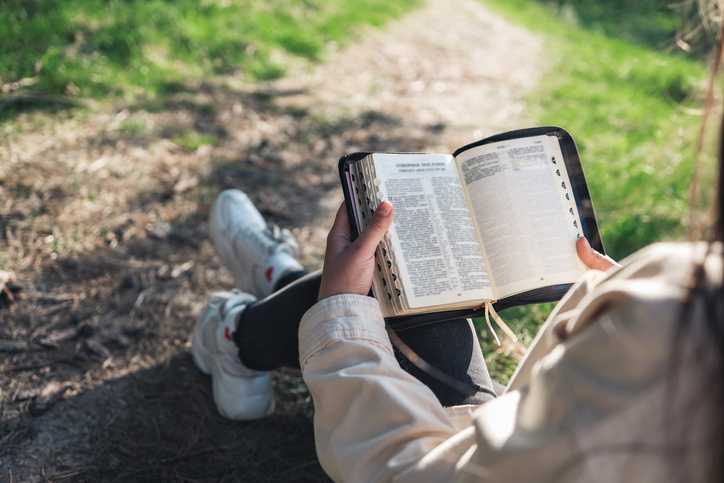
Bigness refers to the amount of Bible we are reading. Find time to sit down and read large portions of the Bible. Don’t read verses or sections or even chapters. Read entire books at a time. Carve out some time and read a Gospel in one sitting. Read Paul’s letters as if you had just gotten a letter from a friend. You wouldn’t put down their letter until you are finished. Or read the entire book of Ruth at one time.
Puede que no te resulte práctico hacerlo todos los días. Pero, ¿puedes encontrar tiempo una vez a la semana para leer en grande? Cuando leemos libros completos o movimientos de la Biblia, oiremos, experimentaremos y amaremos este libro de diferentes maneras que nos invitan a comprometernos de verdad con la Palabra de Dios.
Tip #2: Read your Bible in community
How good are you at keeping New Year’s resolutions? If you are like the rest of us, then you’re probably not great at them either. The majority of Resolutions made in the New Year are not kept. For many of us, they only last a few weeks. Sometimes it is just a few days.
A lot of Christians started the new year with a big dream of reading the Bible more. This may be daily or all the way through.
Y a pesar de todas nuestras buenas intenciones, cumplirlo es difícil.
Una de las mejores maneras de cumplir con nuestro compromiso de lectura de la Biblia es leer en comunidad.
We find support systems for all sorts of new behaviors instead of going at it alone. Groups and support systems serve as a motivation and, most importantly, as accountability to stick with those new commitments. We know that motivation and accountability are important. That will increase the likelihood that we stick with hard things, especially when we don’t do them alone.
¿Por qué debería ser diferente la lectura de la Biblia? ¿Por qué pensamos que tenemos que hacerlo solos?
Si sabemos que necesitamos responsabilidad y comunidad para hacer ejercicio, comer sano y perder peso, ¿qué tal si encontramos responsabilidad y comunidad para leer la Biblia este año?
Finding a small group of people and reading on the same Bible reading schedule is a powerful motivation. You are able to hold each other accountable by discussing what you are reading together.
Walk Thru even has a Daily Walk 2024 Facebook group to learn & grow together with people all around the world- join today!
Tip #3: Pray the Scriptures
What is the most unusual thing you’ve ever had on your Christmas list? When my oldest son was around 5 years old, he added a bag of dirt as a last-minute addition to his list. He wanted some dirt to build a track for his toy trucks, so we made sure he unwrapped some dirt on Christmas morning. However, we did get some strange looks when he told people what was on his Christmas list!
Como seguidor de Cristo, a veces me pregunto cómo ve Dios el tipo de peticiones que hacemos en oración. ¿Suenan mis oraciones como las de un niño malcriado que pide y espera todo? ¿O parecen peticiones al azar, como pedir una bolsa de tierra para Navidad?
“If you remain in Me and My words remain in you, ask whatever you wish, and it will be done for you.” Jesus says in John 15:7.
Our attention is usually drawn to the last part of that verse; ask whatever you wish and it will be done for you. What a remarkable promise! But Jesus qualifies that with an often overlooked “if”—if you remain in Me and My words remain in you.
How do we pray asking God what we wish for but doing so knowing that God’s Word has remained in us? The answer to this question is why I think it is important to pray the Scripture. Which is the third tip to maximize your Bible reading in the new year.
Praying the Scriptures is a longstanding discipline of using the Bible as our guide in prayer. As you read the Bible, pause and pray back to God the ideas or even the words you’ve read. It may be a prayer of thanksgiving as the Bible reminds us of God’s goodness in our life. Or it could convict us when we’ve read something; or it may request a prayer of confession.
Orar las Escrituras a menudo requiere una lectura lenta y deliberada de la Biblia. Sin embargo, es una de las maneras más eficaces de alinear nuestras oraciones con la voluntad y la Palabra de Dios. Si no has estado orando tu camino a través de la Biblia, trata de experimentar las Escrituras a través de la lente de la oración en el nuevo año.
Tip #4: Listen instead of read
There is an interesting, and perhaps too easily overlooked, instruction in 1 Timothy 4:13, “Until I come, devote yourself to the public reading of Scripture, to preaching and teaching.”
La mayoría de nosotros, especialmente en Occidente, tenemos acceso ilimitado a la Biblia. Desde una copia de las Escrituras que tenemos en nuestras casas o simplemente abriendo una aplicación en nuestro teléfono o incluso escuchando a través de la Palabra, tenemos el notable privilegio de leer la Biblia por nosotros mismos.
The early church transmitted the Bible largely through public reading. During the first century, people in the Greco Roman world commonly shared literature through public reading events. The early church, two thousand years ago, hand wrote printed copies and used digital media.
Listening to the Bible is one way to add variety in our Bible reading and experience the Bible in a different way. This will allow us to return to how God’s Word was received for most early believers.
Listening to the Bible allows us to experience the Bible in new, different ways than when we read. If you’ve been reading the Bible, think about occasionally replacing or adding listening to the voice of God in His Word. There are great audio Bibles, podcasts (including Walk Thru the Bible’s Daily Walk Podcast), and mobile phone apps that will help you listen to the Bible.
The Bible changes everything—and we hope you give it a chance this year to change you.
***
by Michael Gunnin, Walk Thru the Bible’s Chief Growth Officer